Free shipping sitewide!* View Details
Free shipping sitewide!* View Details

Search products, categories...
Do You Need a Steering Stabilizer?
August 19, 2026
0
steering stabilizer
N3 Steering Stabilizer
V2 Steering Stabilizer
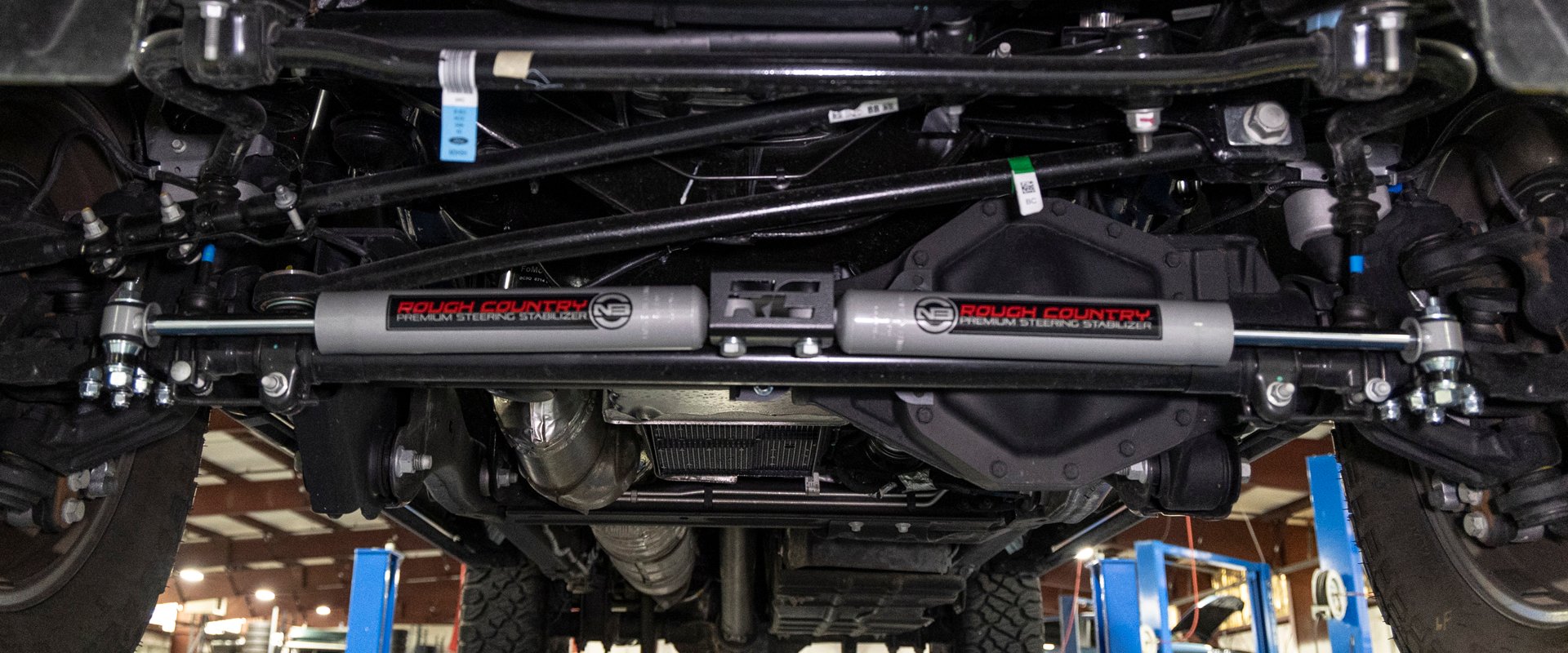
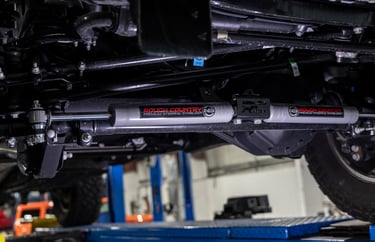
Dual steering stabilizer
What Does a Steering Stabilizer Do?
A steering stabilizer works much like a shock absorber for your steering system.
When a front tire hits an obstacle, force travels through the steering components and toward the steering wheel. The stabilizer helps dampen that movement.
A properly working stabilizer helps reduce:
- Steering wheel kickback
- Shimmy over rough roads
- Sudden steering movement
- Feedback from rocks, ruts, and potholes
A stabilizer does not correct worn steering parts, poor alignment, or damaged suspension components. It works best as part of a healthy steering system.
Get the Latest from Rough Country
Sign up for our newsletter to receive product updates, exclusive deals, and off-road tips straight to your inbox.
When Should You Upgrade Your Steering Stabilizer?
If your vehicle drives well on factory-size tires and your current stabilizer is in good condition, you might have no reason to replace it.
An upgrade becomes more useful when your vehicle setup or driving conditions change.
You Added Larger Tires
Larger and heavier tires often send more feedback through the steering system, especially on rough roads and trails.
For example, a Jeep running oversized mud-terrain tires might feel more steering wheel movement over rocks or potholes than the same Jeep on factory tires. An upgraded stabilizer helps control some of that added movement.
You Lifted Your Truck or Jeep
A lift changes suspension and steering geometry. Proper alignment and correct steering geometry should always come first.
Depending on your vehicle, lift height, and tire size, an upgraded stabilizer might help improve steering control after the lift.
You Spend More Time Off-Road
Trail driving exposes your front tires to constant impacts from rocks, roots, ruts, and washouts.
If the steering wheel frequently kicks or moves when your tires hit obstacles, more steering damping might improve control and comfort.
UTVs face many of the same conditions, although steering designs vary by machine. Always choose a stabilizer designed for your specific vehicle.
What Are the Signs of a Worn Steering Stabilizer?
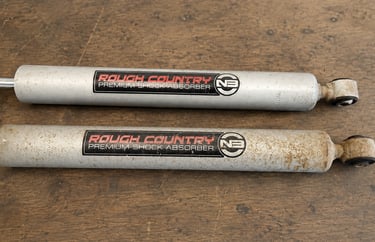
Like other dampers, steering stabilizers wear over time.
Common signs include:
- Fluid leaking from the stabilizer
- A bent or damaged body
- Damaged mounting hardware
- Increased steering wheel kickback
- More shimmy after hitting bumps
- Less resistance during inspection
These symptoms do not always mean the stabilizer is the problem. Tie rods, ball joints, track bars, wheel bearings, tires, and alignment also affect steering behavior.
If the steering suddenly feels loose, unstable, or different from normal, inspect the full steering and suspension system.
Will a Steering Stabilizer Fix Death Wobble?
No. A steering stabilizer should not be treated as a fix for death wobble.
Death wobble usually points to wear, looseness, or another problem within the steering or suspension system. The track bar, tie rods, ball joints, control arms, wheel bearings, tires, and alignment all deserve inspection.
A new stabilizer might reduce some of the vibration felt through the steering wheel, but the underlying problem still needs to be identified and repaired.
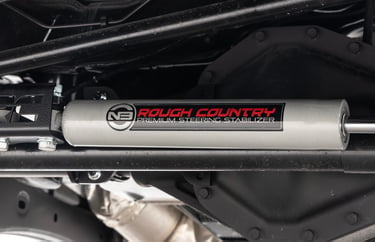
Single vs. Dual Steering Stabilizers
A single steering stabilizer uses one damper. A dual setup uses two.
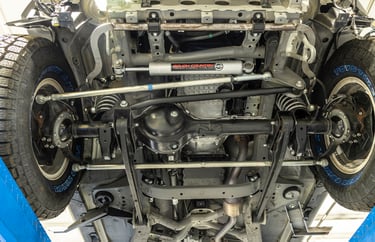
A single stabilizer works well for many stock or mildly modified trucks and Jeeps. It also makes sense when replacing a worn factory unit.
A dual setup provides additional damping and is often considered for vehicles with larger tires, suspension lifts, heavier setups, or frequent rough-terrain use.
Two stabilizers are not automatically better than one. Your vehicle, tire size, suspension setup, and driving habits should determine which setup makes sense.
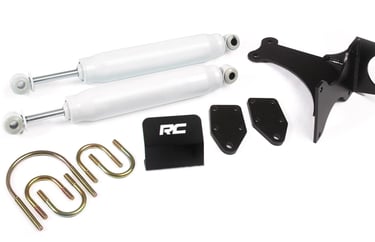
How to Choose the Right Steering Stabilizer
Before buying a steering stabilizer, look at your entire setup.
Check Your Vehicle Fitment
Start with your exact year, make, model, drivetrain, and suspension height. Some steering stabilizer kits have specific lift or fitment requirements.
Consider Your Tire Size
Larger tires often place more demand on the steering system. Tire size, weight, and wheel setup all affect steering feel.
Think About How You Drive
A daily-driven truck on pavement has different needs from a Jeep running rocky trails or a UTV spending weekends on rough terrain.
If your vehicle sees frequent off-road use, extra damping might make more sense than it does for a mostly stock street-driven vehicle.
Inspect Your Steering First
Check for worn or loose steering components before installing a new stabilizer.
A stabilizer should help control steering movement. It should not be used to hide worn tie rods, ball joints, bearings, or other mechanical problems.
Choose Single or Dual
A single stabilizer often works well for stock and moderately modified vehicles.
A dual setup might make sense for larger tires, lifted vehicles, heavier builds, or rigs exposed to frequent rough terrain.
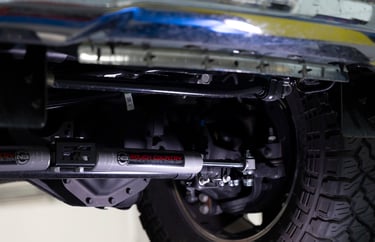
Rough Country offers steering stabilizer options for a range of trucks and Jeeps, including single and dual setups.
The right choice depends on your vehicle, suspension height, tire size, and how you drive. Start by making sure your steering and suspension components are in good condition, then choose a stabilizer designed for your specific application.
FAQs
Do I need a steering stabilizer with a lift kit?
Not always. Your vehicle, lift height, tire size, steering geometry, and driving conditions all matter. Check the requirements for the specific stabilizer kit you are considering.
Do bigger tires require a steering stabilizer?
Not automatically. Larger and heavier tires often create more steering feedback, though, so an upgraded stabilizer might help control unwanted movement.
Is a dual steering stabilizer better than a single?
It depends on the vehicle. Dual stabilizers provide more damping, while a single setup works well for many stock and moderately modified vehicles.
Will a steering stabilizer tighten loose steering?
A stabilizer helps control steering movement, but it will not repair loose steering caused by worn tie rods, ball joints, wheel bearings, or other steering components.

![Steering Stabilizer [8731730]](https://media.prod.roughcountry.com/cdn-cgi/image/width=155,format=webp,fit=cover/media/catalog/product/i/m/img_6882_preview.jpg)