Free shipping sitewide!* View Details
Free shipping sitewide!* View Details

Search products, categories...
What Size Tires Fit with a Lift Kit?
August 27, 2026
0
lift kit
All-Terrain Tires
Mud-Terrain Tires
Terrain-Specific Tires
ridge grabbler tire
offroad tire
33 inch tires
35 inch tires
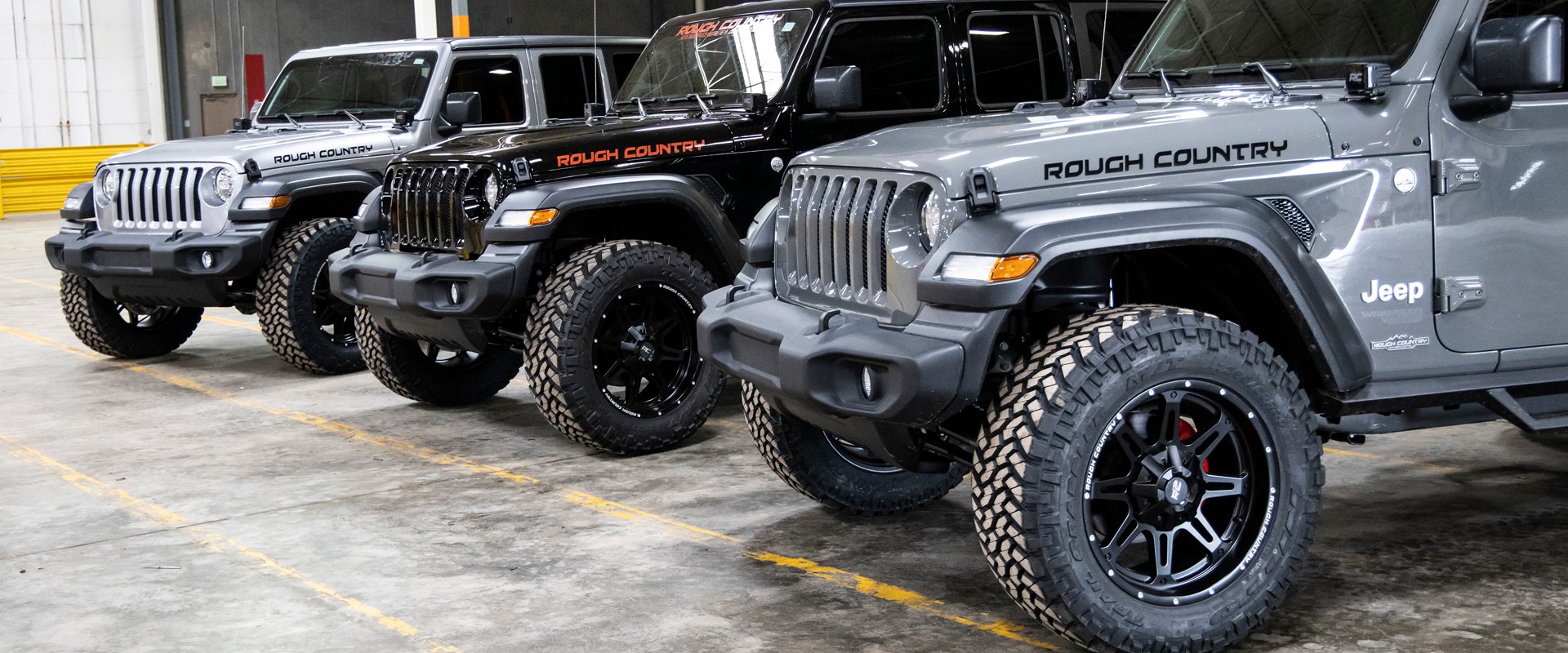
What Size Tires Fit With a 2 to 2.5-Inch Lift?
Around 33-inch tires are common with many 2 to 2.5-inch lift setups.
This size gives you a larger stance and more ground clearance without making as big of a jump as 35s or 37s. Exact fitment still depends on your vehicle, wheel width, offset, backspacing, and tire width.
Some 33-inch tire combinations fit without trimming, while others need minor clearance changes depending on the wheel setup.
Before ordering tires, check the fitment notes for your exact Rough Country lift kit.
What Size Tires Fit With a 3 to 4-Inch Lift?
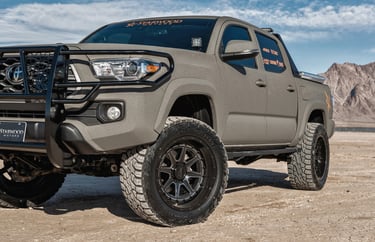
Many full-size trucks with a 3 to 4-inch lift run tires in the 33- to 35-inch range.
35-inch tires are a common choice in this lift range, but fitment varies by truck. Some applications support 35s with little or no trimming, while others require specific wheel dimensions or additional clearance.
Wheel width and offset matter more as tire size increases, so do not choose a tire based on lift height alone.
Check the recommended wheel and tire combinations for your exact Rough Country kit before ordering.
Get the Latest from Rough Country
Sign up for our newsletter to receive product updates, exclusive deals, and off-road tips straight to your inbox.
What Size Tires Fit With a 6-Inch Lift?
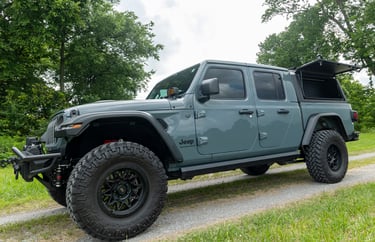
Many full-size trucks with a 6-inch lift run tires in the 35- to 37-inch range.
37-inch tires are common on larger lifted truck builds, but a 6-inch lift does not automatically mean every truck fits 37s.
Rough Country fitment varies by vehicle. Some 6-inch full-size truck kits support 37-inch tires, while other vehicles support smaller maximum tire sizes even with the same amount of lift.
Always check the tire size, wheel width, offset, backspacing, and trimming notes listed for your exact suspension kit.
How Wheel Backspacing and Offset Affect Tire Fitment
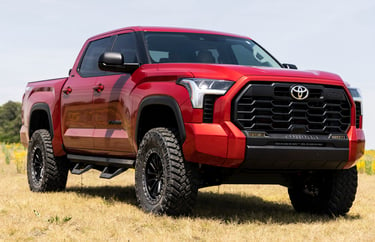
Lift height creates additional clearance, but wheel position also affects whether a larger tire fits.
Backspacing is measured in inches from the wheel's mounting surface to the inside edge of the wheel. A wheel with less numerical backspacing sits farther outward. For example, a wheel with 4.5 inches of backspacing places the tire farther away from the vehicle than a wheel with 6 inches of backspacing.
Trucks and SUVs running taller or wider tires often need less backspacing than their factory wheels to help keep the tire away from suspension, frame, and body components.
Offset describes the wheel's position relative to its centerline and is measured in millimeters. More-negative offset moves the wheel farther outward. For example, a -44 mm offset wheel sits farther outside the fender than a -11 mm offset wheel of the same width.
Moving the wheel outward creates more clearance on the inside, but farther out is not always better. Moving the wheel and tire farther away from the vehicle increases the load on steering components and changes handling characteristics.
Follow the tire size, wheel width, offset, and backspacing recommendations listed for your exact Rough Country lift kit. Some setups also require trimming or a wheel spacer, so check the product's Tire & Wheel Details before choosing your setup.
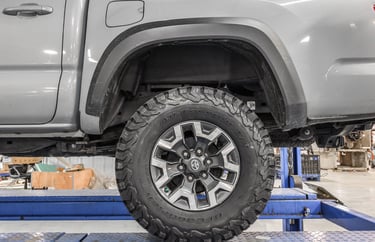
Do Larger Tires Rub After Installing a Lift Kit?
Larger tires might rub even after installing a lift kit.
Common causes include:
- Tire width
- Wheel width
- Incorrect wheel offset
- Incorrect backspacing
- Limited wheel-well clearance
- Contact with control arms or suspension components
- Contact with fender liners or inner fenders
Rubbing often happens during tight turns or suspension travel instead of while the truck is sitting still.
Some wheel and tire combinations also require minor trimming. Rough Country fitment notes often list the tire size, wheel specifications, and trimming requirements for each suspension kit.
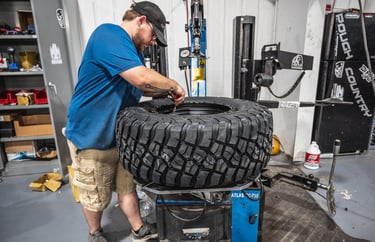
Find the Right Tire Size for Your Lift Kit
Lift height gives you a starting point, but your exact suspension kit should determine your final tire choice.
As a general guide:
|
Suspension Setup |
Common Tire Size |
|
2 to 2.5-inch lift |
Around 33 inches on many applications |
|
3 to 4-inch lift |
Around 33 to 35 inches on many full-size trucks |
|
6-inch lift |
Around 35 to 37 inches on many full-size trucks |
Before ordering, select your exact year, make, and model and review the wheel and tire recommendations listed with your Rough Country lift kit.
FAQs
Why do my tires rub even with a lift kit?
A lift creates more clearance, but tire width, wheel width, offset, backspacing, and wheel-well shape still affect fitment. Rubbing might occur against the suspension, frame, fender liner, or inner fender during turns or suspension travel.
Does wheel offset affect tire clearance?
Yes. Wheel offset changes how far inward or outward the tire sits. The wrong offset might cause contact with suspension components, the frame, fender liners, or outer fenders.
Will larger tires rub after installing a lift kit?
They might. Tire width, wheel width, offset, backspacing, lift height, and vehicle-specific wheel-well clearance all affect rubbing. Review the fitment notes for your exact Rough Country suspension kit before choosing tires.
Do I need to recalibrate my speedometer after installing larger tires?
Larger tires change the relationship between wheel rotation and road speed, which affects speedometer accuracy. Rough Country offers speedometer calibrators for supported applications to account for larger tire sizes.